Jeffrey Epstein Biography: Crimes, Death, Family, Wikipedia
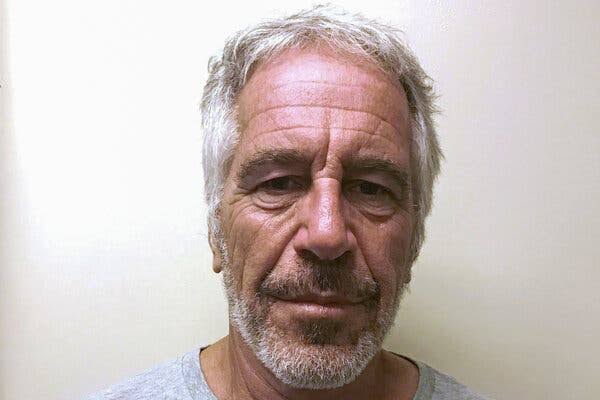
Jeffrey Epstein Biography: Early Life, Career, Wealth, Crimes, Victims, Associates, Death & Legacy
Jeffrey Edward Epstein (January 20, 1953 – August 10, 2019) was an American financier and convicted sex offender whose life combined wealth, elite social connections and a long-running pattern of sexual abuse and exploitation of girls and young women.
He became internationally notorious after his 2008 conviction in Florida for soliciting prostitution and procuring a minor for prostitution, followed by his controversial federal non-prosecution agreement. In 2019, federal prosecutors in New York arrested him again and charged him with sex trafficking of minors and conspiracy to commit sex trafficking of minors. He died in federal custody on August 10, 2019, before the federal case could go to trial.
His death generated enormous public controversy because of his connections to wealthy and influential people and because the 2019 federal prosecution was never completed against him personally. Officially, authorities announced his death as an apparent suicide.
Jeffrey Epstein: Quick Facts
| Category | Details |
|---|---|
| Full name | Jeffrey Edward Epstein |
| Born | January 20, 1953 |
| Birthplace | Brooklyn, New York, U.S. |
| Died | August 10, 2019 |
| Age at death | 66 |
| Nationality | American |
| Occupation | Financier, money manager |
| Education | Lafayette High School; attended Cooper Union and NYU without graduating |
| Early career | Teacher, then Wall Street/finance |
| Major financial firm | J. Epstein & Co. |
| 2008 conviction | Solicitation of prostitution and procurement of a minor for prostitution |
| 2019 federal charges | Sex trafficking of minors and conspiracy |
| Death | In federal custody in Manhattan |
| Officially announced manner | Apparent suicide |
| Known close associate | Ghislaine Maxwell |
| Children | None publicly known |
| Marital status | Never married |
| Estate at death | Reported at roughly $630 million |
Early Life and Childhood
Jeffrey Epstein was born on January 20, 1953, in Brooklyn, New York.
He was the son of Seymour Epstein, who worked for New York City’s Parks Department, and Pauline Epstein, who worked as a school aide. He had a younger brother, Mark Epstein.
Epstein grew up in a middle-class Brooklyn family and was considered academically gifted, particularly in mathematics.
According to biographical accounts, he skipped two grades and graduated from Lafayette High School at age 16. He subsequently attended Cooper Union and later New York University, but did not earn a university degree.
His lack of a college degree did not prevent him from entering elite professional circles.
Epstein’s Career as a Teacher
In 1974, Epstein obtained a teaching position at the prestigious Dalton School on Manhattan’s Upper East Side.
He taught mathematics and physics, despite not having completed a university degree.
His time at Dalton was relatively short.
He left the school in 1976 after being dismissed for what the school described as poor performance.
The Dalton position nevertheless proved important because it introduced him to wealthy New York families.
One particularly important connection was Alan Greenberg, then chairman of the investment bank Bear Stearns.
That relationship helped Epstein enter the financial industry.
Entry Into Wall Street
After leaving Dalton, Epstein joined Bear Stearns, one of Wall Street’s major investment firms.
He worked in options trading and developed a reputation for working with wealthy clients.
Although his background was unconventional for Wall Street, Epstein was able to move into increasingly sophisticated financial circles.
He eventually left Bear Stearns and established his own financial consulting operation.
J. Epstein & Co.
Epstein later founded J. Epstein & Co., a private financial-management and consulting firm.
He presented himself as a specialist who managed money and financial affairs for extremely wealthy clients.
One of his most important relationships was with Leslie Wexner, founder of The Limited and a major American retail billionaire.
Wexner became Epstein’s most prominent publicly known client.
Epstein was given considerable authority over Wexner’s financial affairs, including power of attorney.
Their relationship eventually ended.
Wexner later said Epstein had misappropriated substantial sums and that he had been deceived about Epstein’s activities. Epstein’s precise route to his fortune remains an area of continuing investigation and debate.
How Did Jeffrey Epstein Become Rich?
This is one of the most frequently asked questions about Epstein.
The answer is complicated.
Epstein presented himself as a financial adviser to billionaires, but the exact origins of his wealth were never completely transparent.
His wealth came from a combination of:
- financial advisory work;
- private investments;
- relationships with extremely wealthy clients;
- real estate;
- offshore entities;
- tax and financial planning;
- and other business arrangements.
He owned or controlled substantial assets through corporations, trusts and other legal entities.
However, there has never been a simple, independently documented explanation showing exactly how every dollar of his fortune was accumulated.
This lack of transparency became particularly significant after his criminal investigations.
Epstein’s Wealth
At the time of his death, Epstein’s estate was generally reported at around $630 million.
His assets included:
- luxury homes;
- private aircraft;
- investments;
- bank accounts;
- companies and trusts;
- and extensive real estate holdings.
His properties included a large Manhattan townhouse, a Palm Beach residence, a New Mexico ranch and properties in the U.S. Virgin Islands.
More recent estate records and document releases have provided additional details about his financial structure, but his exact lifetime net worth remains difficult to establish.
Important distinction
Epstein was not a publicly traded-company billionaire whose wealth could easily be verified through stock ownership.
Therefore, websites that confidently state an exact “Jeffrey Epstein net worth” should be treated cautiously.
A reasonable description is:
Epstein controlled hundreds of millions of dollars in assets by the time of his death, with his estate valued at roughly $630 million in 2019.
Jeffrey Epstein’s Properties
Epstein accumulated an extraordinary collection of properties.
Manhattan Townhouse
His New York residence was a huge townhouse on East 71st Street in Manhattan.
The property became one of the central locations in the criminal allegations against him.
Palm Beach Mansion
He also owned a large residence in Palm Beach, Florida.
The Palm Beach property became particularly important in the original investigation that ultimately led to his 2008 conviction.
New Mexico Ranch
Epstein owned a vast ranch in Santa Fe County, New Mexico, commonly known as Zorro Ranch.
The property became another location associated with allegations against him.
Little Saint James
Perhaps the most famous of Epstein’s properties was Little Saint James, a private island in the U.S. Virgin Islands.
It became widely known in the media as “Epstein Island.”
The island was associated with allegations of sexual abuse and exploitation.
It is important, however, not to infer criminal conduct by every person who ever visited the island merely because their name appears in a travel record or other document.
The Beginning of the Criminal Investigation
The major criminal investigation into Epstein began in Palm Beach, Florida, in the mid-2000s.
Police became involved after the family of a teenage girl reported concerns about Epstein’s conduct.
Investigators subsequently identified numerous girls and young women who said they had been sexually abused or exploited.
The investigation expanded considerably.
According to later federal findings, investigators had identified numerous potential victims and developed evidence concerning Epstein’s conduct.
The 2008 Criminal Case
In 2008, Epstein entered a controversial agreement with federal prosecutors in South Florida.
Rather than facing federal prosecution on the broader allegations under investigation, he agreed to plead guilty to state charges.
On June 30, 2008, he pleaded guilty to:
- felony solicitation of prostitution, and
- procuring a person under 18 for prostitution.
The Justice Department’s later review confirmed these details.
He was sentenced to incarceration and community control.
He ultimately served approximately 13 months in custody, with significant work-release privileges.
Why Was the 2008 Plea Deal So Controversial?
The agreement became one of the most controversial aspects of the Epstein case.
Federal prosecutors had investigated allegations involving numerous underage girls, but the federal case was resolved through a non-prosecution agreement (NPA).
The agreement effectively prevented federal prosecution of Epstein in South Florida for the conduct covered by the agreement.
The treatment of victims became a major issue.
In 2020, the Justice Department’s Office of Professional Responsibility released its findings concerning the 2006–2008 investigation.
The review concluded that then-U.S. Attorney Alexander Acosta exercised poor judgment in resolving the federal investigation through the non-prosecution agreement.
It also found that victims were not treated with the forthrightness and sensitivity expected by the Department of Justice.
Epstein Became a Registered Sex Offender
Following his 2008 conviction, Epstein was required to register as a sex offender.
Nevertheless, he continued to maintain a remarkably extensive social network involving prominent figures in business, politics, academia, entertainment and royalty.
That continued access to elite circles later became a major source of public outrage.
The Epstein Victims
One of the most important aspects of the story is the large number of women who have described being abused or exploited by Epstein.
Federal prosecutors stated in their 2019 indictment that Epstein recruited dozens of underage girls, some as young as 14.
According to prosecutors, victims were often initially brought to Epstein’s properties for supposed “massages.”
They were then sexually abused.
Some victims were paid hundreds of dollars and were allegedly encouraged to recruit additional girls.
The federal indictment described this recruitment system as a way of maintaining a continuing supply of underage victims.
How the Recruitment System Worked
According to the 2019 federal indictment, the alleged pattern generally involved:
- A young girl being recruited for a paid massage.
- The girl arriving at Epstein’s property.
- Epstein sexually abusing her.
- The girl receiving cash.
- Some victims being offered additional money to recruit other girls.
- Those new recruits then being subjected to similar abuse.
Federal prosecutors said some victims were as young as 14 and that Epstein knew some of the girls were underage.
The allegations described a system rather than isolated incidents.
Jeffrey Epstein and Ghislaine Maxwell
One of Epstein’s closest associates was Ghislaine Maxwell, the British socialite and daughter of media proprietor Robert Maxwell.
Maxwell became a central figure in the later criminal investigation.
Prosecutors accused her of helping Epstein recruit and groom underage girls.
Unlike Epstein, Maxwell was eventually brought to trial.
A federal jury found Maxwell guilty in December 2021 of multiple offenses relating to the sexual abuse of minors.
She was sentenced to 20 years in prison in June 2022.
Her conviction provided the criminal-justice system with a separate courtroom examination of part of the Epstein network.
Epstein’s 2019 Arrest
In July 2019, Epstein was arrested by federal authorities in New York.
The Southern District of New York charged him with:
- sex trafficking of minors, and
- conspiracy to commit sex trafficking of minors.
Prosecutors alleged that the criminal conduct occurred between approximately 2002 and 2005 in New York and Florida and involved dozens of underage girls.
This was a substantially more serious case than his 2008 Florida conviction.
What Prosecutors Alleged in 2019
The indictment alleged that Epstein:
- recruited underage girls;
- paid them cash for sexual encounters;
- sexually exploited victims;
- used employees and associates in his recruitment system;
- and paid some victims to recruit additional girls.
The indictment stated that some victims were only 14 years old.
These were criminal allegations against Epstein in the 2019 case; he died before the charges could be tried.
Jeffrey Epstein’s Death
On August 10, 2019, Epstein was found unresponsive in his cell at the Metropolitan Correctional Center in Manhattan.
He was pronounced dead shortly afterward.
The U.S. Attorney’s Office announced his death as an apparent suicide.
He was 66.
Because he died before trial, the 2019 federal charges against him were never adjudicated in court.
Why Did Epstein’s Death Cause So Much Controversy?
Several circumstances contributed to the public controversy.
Epstein had previously been placed under suicide watch after an earlier incident in jail.
He was later returned to the general population.
At the time of his death, there were also serious questions about staffing and monitoring at the detention facility.
His death occurred while he was awaiting trial on extraordinarily serious charges.
Because he had relationships with numerous powerful people, his death immediately generated conspiracy theories about whether someone had arranged for him to be killed.
However:
Officially, his death was classified as suicide.
Claims that he was murdered remain theories rather than established facts.
The Famous “Epstein Didn’t Kill Himself” Phrase
The phrase “Epstein didn’t kill himself” became an internet meme and conspiracy slogan following his death.
It reflects widespread public skepticism about the circumstances surrounding his death.
But it is important to distinguish public suspicion from evidence.
The official position remains that Epstein died by suicide.
Epstein’s Social Circle
Perhaps no aspect of his life has attracted more public attention than his relationships with famous and powerful people.
Over the years, Epstein interacted with people from:
- finance;
- politics;
- royalty;
- academia;
- science;
- entertainment;
- philanthropy;
- fashion;
- and business.
Photographs, address books, emails, flight records and other documents have subsequently revealed numerous contacts.
But an important warning is necessary:
Being named in an Epstein document does not by itself establish criminal wrongdoing.
A person could appear because they:
- met Epstein socially;
- exchanged correspondence;
- traveled on a plane;
- attended an event;
- worked for him;
- had a business relationship;
- or was mentioned by somebody else.
The evidence for each individual must therefore be assessed separately.
The “Epstein List” Myth
Online discussion frequently refers to an alleged definitive “Epstein list.”
There is no single document that can responsibly be described as a master list of everyone involved in Epstein’s crimes.
Instead, there are many categories of records:
- contact books;
- flight logs;
- court filings;
- depositions;
- emails;
- financial records;
- photographs;
- witness statements;
- investigative documents;
- and other evidence.
A person’s appearance in one of these records does not automatically mean that person participated in Epstein’s crimes.
This distinction is essential when writing about the case.
Epstein’s Relationship With Powerful People
Epstein cultivated relationships with prominent figures because his social network was an important part of his identity and business model.
He attended elite events and hosted gatherings at his properties.
His connections included wealthy businessmen, politicians, academics and celebrities.
The existence of these relationships has been extensively documented.
But accusations against Epstein should not automatically be transferred to every person who knew him.
Epstein and Donald Trump
Epstein and Donald Trump were socially acquainted for years, particularly in Palm Beach and New York social circles.
There are photographs and public footage of the two men together.
However, Trump has not been convicted of crimes related to Epstein, and being socially acquainted with Epstein is not evidence by itself of participation in Epstein’s crimes.
This is an important example of why Epstein-related reporting requires careful distinction between association and criminal culpability.
Epstein and Bill Clinton
Former U.S. President Bill Clinton also had documented contact with Epstein and traveled on Epstein’s aircraft on several occasions.
Clinton has denied knowledge of Epstein’s criminal conduct.
Again, the existence of flights or social contacts does not itself establish participation in Epstein’s crimes.
Epstein and Prince Andrew
The relationship between Epstein and Prince Andrew became particularly controversial.
Virginia Giuffre, one of Epstein’s prominent accusers, alleged that she was sexually abused by Prince Andrew when she was underage.
Prince Andrew denied the allegations.
The dispute eventually resulted in a civil settlement in 2022, without an admission of liability by Prince Andrew.
Unlike Epstein’s criminal prosecution, the case against Prince Andrew was a civil matter and did not result in a criminal conviction.
Virginia Giuffre
Virginia Giuffre became one of the most prominent public accusers of Epstein and later of Prince Andrew.
She said that she was recruited into Epstein’s orbit as a teenager and sexually exploited.
Giuffre became a major advocate for survivors of trafficking and sexual abuse.
Her legal actions helped bring additional public attention to Epstein’s network and to allegations involving other powerful individuals.
She died in 2025, according to public reports, after years of advocacy and litigation.
The Epstein Files
Following Epstein’s arrest and death, courts and government agencies released thousands of pages of records.
These documents have included:
- court filings;
- witness testimony;
- depositions;
- emails;
- travel records;
- financial records;
- photographs;
- investigative materials;
- and other documents.
Further document releases occurred in 2025 and 2026, generating renewed international interest.
The existence of these files does not mean every allegation contained in them is proven.
Some documents contain allegations, hearsay or references to individuals who were never accused of wrongdoing.
Epstein’s Estate After His Death
Epstein’s death did not end the legal consequences of his conduct.
His estate became involved in extensive litigation involving victims and creditors.
A compensation program was established to provide financial payments to survivors who submitted claims and met the program’s requirements.
His estate also faced claims concerning properties and assets.
The estate has consequently become an important part of the posthumous legal history of the case.
Jeffrey Epstein’s Net Worth
The most defensible figure for Epstein’s wealth at the time of his death is approximately:
$630 million
That figure comes from valuations of his estate around 2019.
His assets included:
- real estate;
- investments;
- cash;
- aircraft;
- corporate interests;
- and other holdings.
His wealth was unusual because Epstein did not operate a widely recognizable public corporation that explained his fortune.
That has generated continuing questions about how exactly he accumulated and managed his money.
Did Jeffrey Epstein Have a Wife or Children?
Epstein was never publicly known to have married.
He also had no publicly acknowledged children.
He maintained relationships with numerous women, but his personal romantic life was generally kept separate from his public financial persona.
Jeffrey Epstein’s Personal Life
Despite his wealth, Epstein maintained an unusually secretive personal life.
He owned enormous properties and traveled extensively but avoided traditional celebrity status.
His public identity was primarily built around:
- wealth;
- finance;
- philanthropy;
- intellectual networking;
- elite social connections;
- and access to powerful people.
The contrast between this image and the criminal allegations against him became one of the defining features of his story.
Epstein and Science/Academia
Epstein also cultivated relationships with prominent academics and scientists.
He donated or pledged money to scientific and educational causes and attended high-level intellectual gatherings.
This helped create a reputation among some people as a philanthropist and intellectual patron.
The later revelations about his sexual abuse created substantial controversy for institutions that had accepted his money or allowed him access.
Several universities and research institutions subsequently reviewed or returned donations connected to Epstein.
Was Jeffrey Epstein a Billionaire?
Epstein was sometimes described in media coverage as a billionaire or “billionaire financier.”
However, his documented estate at death was around $630 million, substantially below $1 billion.
Therefore, describing him simply as a billionaire is misleading unless referring to claims made during earlier periods or to estimates that were not independently established.
A more accurate description is:
A wealthy American financier who controlled hundreds of millions of dollars in assets.
Major Timeline
1953
Jeffrey Epstein is born in Brooklyn, New York.
1970s
Attends Cooper Union and NYU without earning a degree.
1974
Begins teaching mathematics and physics at Dalton School.
1976
Leaves Dalton and enters finance.
Late 1970s–1980s
Works in financial services and establishes his own financial operation.
1980s–1990s
Builds relationships with wealthy clients and expands his fortune.
1990s–2000s
Develops a large network of influential business, political and academic contacts.
2005
Palm Beach authorities begin investigating allegations involving teenage girls.
2006–2007
Federal and local investigations intensify.
2008
Pleads guilty to Florida state charges involving prostitution and a minor.
2008–2009
Serves approximately 13 months in custody with work-release privileges.
2010s
Continues traveling and maintaining relationships with prominent people despite registered-sex-offender status.
2018
Investigative reporting renews attention on his earlier case.
July 2019
Arrested and federally charged with sex trafficking of minors and conspiracy.
August 10, 2019
Dies in federal custody. Authorities announce an apparent suicide.
2020
Ghislaine Maxwell is arrested.
2021
Maxwell is convicted in federal court.
2022
Maxwell is sentenced to 20 years in prison.
2025–2026
Additional Epstein-related documents, financial records and investigative materials receive substantial public attention.
Jeffrey Epstein’s Legacy
Jeffrey Epstein’s legacy is fundamentally tied to sexual abuse, exploitation and the failures of institutions that allowed his activities to continue for years.
His story raises several major questions:
- How did he accumulate his fortune?
- Why did wealthy and influential people continue associating with him after his 2008 conviction?
- Why did authorities give him such favorable treatment in the 2008 case?
- How many victims were affected?
- Who else, if anyone, knowingly assisted his criminal activities?
- Why did institutional safeguards fail?
- How should governments and organizations respond when wealthy individuals exercise extraordinary influence?
Some of these questions have been answered through criminal cases and investigations. Others remain subjects of continuing investigation and public debate.
Jeffrey Epstein: The Most Important Facts
If the entire biography is reduced to the essential points:
Jeffrey Epstein was born in Brooklyn in 1953 and entered finance after briefly working as a teacher.
He accumulated hundreds of millions of dollars and developed relationships with extremely wealthy and influential people.
His criminal conduct involving girls and young women first resulted in a major investigation in Florida in the mid-2000s.
In 2008, he pleaded guilty to Florida state charges involving prostitution and a minor and served approximately 13 months.
In 2019, federal prosecutors charged him with sex trafficking of minors and conspiracy, alleging a network involving dozens of underage victims.
He died in federal custody on August 10, 2019, before trial. Authorities announced an apparent suicide.
His associate Ghislaine Maxwell was subsequently convicted of facilitating the sexual abuse of minors and sentenced to 20 years in prison.
Final Assessment
Jeffrey Epstein’s biography is not fundamentally a story about a mysterious millionaire or his celebrity connections. It is the story of how wealth, social status, institutional failures and access to powerful networks intersected with the sexual exploitation of vulnerable girls and young women.
His 2008 conviction established that he was a convicted sex offender. The 2019 federal indictment then alleged a much broader trafficking operation involving dozens of minors, but because Epstein died before trial, those federal allegations against him were never adjudicated by a jury.
The subsequent conviction of Ghislaine Maxwell established in court that at least part of the recruitment and abuse operation involved another person who worked with Epstein.
His death ended the possibility of a criminal trial against him, but it did not end the investigations, civil litigation, estate proceedings or questions surrounding the people and institutions connected to his activities.
Most importantly, the victims—not Epstein’s wealth or famous acquaintances—should remain at the center of the story.