Greta Thunberg Biography: Age, Activism, Books, Education
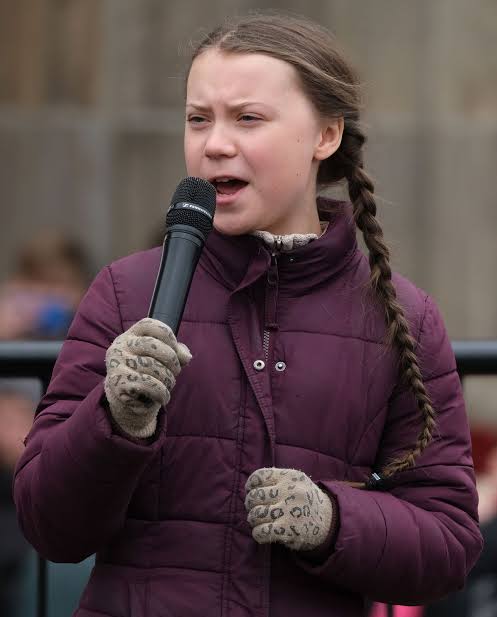
Greta Thunberg Biography: Age, Family, Education, Activism, Books, Awards, Net Worth & Life Story
Greta Thunberg is a Swedish environmental activist who became one of the world’s most recognizable voices on climate change after beginning a school strike outside the Swedish Parliament in August 2018. What began as a teenager sitting alone with a handwritten sign developed into Fridays for Future, a global youth climate movement that inspired school strikes and demonstrations across numerous countries.
Born in Stockholm on 3 January 2003, Thunberg is 23 years old as of August 2026. Her activism has extended from climate policy to broader questions of environmental justice, human rights and international solidarity. Her public profile has brought major awards—including TIME Person of the Year in 2019 and the 2019 Right Livelihood Award—as well as criticism, political controversy and legal confrontations.
Quick Facts About Greta Thunberg
| Category | Details |
|---|---|
| Full name | Greta Tintin Eleonora Ernman Thunberg |
| Date of birth | 3 January 2003 |
| Age | 23 years old |
| Birthplace | Stockholm, Sweden |
| Nationality | Swedish |
| Profession | Environmental and climate activist, author |
| Known for | Climate activism and Fridays for Future |
| Movement | Fridays for Future |
| Father | Svante Thunberg |
| Mother | Malena Ernman |
| Grandfather | Olof Thunberg |
| Major international recognition | TIME Person of the Year 2019 |
| Major award | 2019 Right Livelihood Award |
| Famous campaign | School Strike for Climate |
| Major book | The Climate Book |
| Years active | 2018–present |
Her birth date and birthplace are documented by the Right Livelihood Foundation and other biographical sources.
Early Life and Childhood
Greta Thunberg was born in Stockholm, Sweden, on 3 January 2003.
She grew up in a family connected to the Swedish performing arts. Her mother, Malena Ernman, is an internationally known opera singer, while her father, Svante Thunberg, has worked as an actor, producer and manager.
Greta has a younger sister, Beata Thunberg, who has also pursued a career in music and performance.
From childhood, Greta became increasingly concerned about environmental problems. According to accounts of her early years, she learned about climate change while she was still in primary school and was deeply disturbed by what she learned. Guinness World Records reports that she became conscious of climate change at around seven or eight years old.
Rather than regarding climate change as an abstract political issue, she became preoccupied with its potential consequences for the planet and future generations.
Greta Thunberg’s Family
Father: Svante Thunberg
Greta’s father is Svante Thunberg.
He has worked in the entertainment industry and has supported Greta’s activism and international travel.
Her parents have discussed how Greta’s activism influenced the entire family. In particular, her concerns about climate change encouraged changes in their household lifestyle.
Mother: Malena Ernman
Malena Ernman is a Swedish opera singer and one of the most prominent members of Greta’s family.
She represented Sweden in the Eurovision Song Contest 2009 and has had a successful career in opera.
Greta’s mother has publicly supported her daughter’s activism.
Sister: Beata Thunberg
Greta has a younger sister named Beata.
Unlike Greta, who became internationally famous primarily through environmental activism, Beata has pursued interests connected to music and performance.
Because the family has been exposed to considerable public attention, much of their private life has remained outside the public record.
Greta Thunberg’s Education
Greta attended school in Sweden before her climate activism became an international phenomenon.
Her school strike began while she was still a teenager, and education remained an important part of the story surrounding her activism.
Instead of simply leaving school permanently, her initial protest involved deliberately missing school to demonstrate that climate change demanded political attention.
Her activism subsequently required extensive travel and participation in international conferences and demonstrations.
As she became an adult, reports have described her continuing education alongside activism, although details of her current studies have varied across media reports. It is therefore better not to state a specific current degree or institution as an established fact without a direct, current source.
When Did Greta Thunberg Start Climate Activism?
Greta’s activism began publicly in August 2018, when she was 15 years old.
On 20 August 2018, she began sitting outside the Swedish Parliament in Stockholm carrying a sign reading:
“Skolstrejk för klimatet”
which means “School Strike for Climate.”
Her objective was to pressure Swedish politicians to take stronger action on climate change. Fridays for Future Sweden identifies 20 August 2018 as the beginning of the movement.
Initially, Greta protested alone.
That changed rapidly.
The Birth of Fridays for Future
After photographs and reports of Greta’s protest spread online, other young people began organizing similar demonstrations.
Greta continued her strike and eventually shifted to striking every Friday.
The campaign became known as Fridays for Future.
What made the movement particularly remarkable was its decentralized nature. Students in different countries organized their own demonstrations while using the Fridays for Future identity and climate-strike concept.
The movement eventually became international, with young people striking in cities around the world.
This transformed Greta from a Swedish schoolgirl into a global climate activist.
Why Did Greta Thunberg Become Famous?
Greta’s international fame resulted from several factors.
1. Her age
She was only 15 when she began her protest.
2. Her direct language
Rather than using diplomatic language, she frequently challenged political leaders directly.
3. Her consistency
She repeatedly argued that climate change should be treated as a crisis.
4. Social media
Photographs and videos of her protests spread rapidly online.
5. The global movement
Thousands and eventually millions of young people joined climate demonstrations inspired by the movement she helped launch.
TIME described her rise in 2019 as an exceptionally rapid transformation from a solitary teenage protester into a global youth-movement figure.
Greta Thunberg at the United Nations
Greta subsequently became a regular presence at major international climate events.
She addressed world leaders at the United Nations Climate Action Summit in New York in 2019, where she criticized governments for what she regarded as insufficient action on climate change.
Her speeches became a major part of her public identity.
Rather than presenting herself primarily as a climate scientist, she repeatedly emphasized that politicians should listen to climate scientists and act on the scientific evidence.
The Famous “How Dare You?” Speech
One of Greta’s most famous public appearances occurred at the 2019 UN Climate Action Summit.
Her speech strongly criticized political leaders for what she described as inadequate action on the climate crisis.
The speech became one of the defining moments of her early international career.
It also demonstrated an important characteristic of her activism: she has generally preferred confrontation and urgency over diplomatic moderation.
Supporters have praised this approach for communicating the seriousness of climate change.
Critics have argued that her rhetoric can be overly confrontational.
Greta Thunberg’s Atlantic Crossing
In 2019, Greta traveled from Europe to North America by sailing across the Atlantic rather than taking a conventional commercial flight.
She traveled aboard the racing yacht Malizia II, which was equipped with solar panels and underwater turbines.
The voyage was intended to demonstrate her opposition to the carbon emissions associated with air travel and to allow her to attend climate-related events in the United States without flying.
She arrived in New York in August 2019 after crossing the Atlantic.
The journey became one of the most recognizable examples of her personal commitment to reducing the carbon footprint associated with her public activities.
Greta Thunberg and Climate Change
The central message of Greta’s activism is straightforward:
Governments should treat climate change as an emergency and base policy on scientific evidence.
Her demands have included:
- reducing greenhouse-gas emissions;
- accelerating the transition away from fossil fuels;
- protecting ecosystems;
- following the Paris Agreement;
- limiting global warming;
- addressing climate justice;
- and listening to scientific evidence.
Fridays for Future specifically identifies limiting global warming to 1.5°C, implementing the Paris Agreement and pursuing climate justice among its demands.
Greta Thunberg and Climate Justice
As her activism developed, Greta increasingly emphasized climate justice.
Her argument is that climate change does not affect everyone equally.
Poorer communities and countries can be disproportionately vulnerable to:
- drought;
- floods;
- extreme heat;
- food insecurity;
- rising sea levels;
- displacement;
- and other climate-related impacts.
Consequently, she has increasingly connected climate action with questions of inequality, colonialism, human rights and global responsibility.
Greta Thunberg’s Books
Greta has also become an author.
1. No One Is Too Small to Make a Difference
Published in 2019, the book collects speeches and public statements from Greta’s early climate-activism period.
The title reflects one of her central messages: individuals, including young people, can contribute to political and social change.
Penguin Random House lists the book among her principal publications.
2. Our House Is on Fire
Our House Is on Fire was written with Greta, her sister Beata, her mother Malena Ernman and her father Svante Thunberg.
The book discusses the Thunberg family’s experiences and Greta’s transformation into a climate activist.
It also provides a more personal perspective on her childhood and the development of her environmental concerns.
3. The Climate Book
Perhaps Greta’s most ambitious publishing project is The Climate Book.
Rather than being simply a personal memoir, the book brings together contributions from numerous scientists, researchers and specialists.
Penguin Random House describes it as one of her major books and lists it alongside No One Is Too Small to Make a Difference and Our House Is on Fire.
The project reflects an important aspect of Greta’s approach: she frequently says that the public should listen to scientific expertise rather than treat her personally as the authority on climate science.
Greta Thunberg’s Awards and Recognition
Her activism has produced an extraordinary list of international honours.
TIME Person of the Year
In 2019, TIME named Greta Thunberg its Person of the Year.
At 16, she became the youngest person ever to receive the distinction. Guinness World Records records that she was 16 years and 354 days old when the recognition was announced.
The honour placed her in the company of presidents, political leaders and other internationally influential figures.
Right Livelihood Award
In 2019, Greta received the Right Livelihood Award, often informally described as an “Alternative Nobel Prize.”
The Right Livelihood Foundation recognized her for amplifying demands for urgent climate action based on scientific facts.
Nobel Peace Prize Nominations
Greta has been nominated for the Nobel Peace Prize.
However, nomination does not mean that a person has won the prize.
This distinction is important because many online biographies incorrectly describe her as a Nobel laureate.
Greta Thunberg has not won the Nobel Peace Prize.
Greta Thunberg and Her Diagnosis
Greta has publicly discussed being diagnosed with Asperger syndrome, a term historically used within the autism spectrum.
She has spoken about her neurodivergence as something that can influence how she perceives issues and has at times described it positively.
Today, Asperger syndrome is generally included within autism spectrum disorder in modern diagnostic classifications.
Her openness about neurodivergence has also contributed to broader conversations about autism and activism.
Greta Thunberg’s Activism Beyond Climate Change
Although climate change remains the foundation of Greta’s public identity, her activism has expanded.
She has increasingly spoken about:
- environmental justice;
- Indigenous rights;
- human rights;
- war and conflict;
- humanitarian issues;
- Palestinian rights;
- and international solidarity.
Her political activism has therefore become broader and more controversial than her original school-strike campaign.
Greta Thunberg and Palestine/Gaza
In recent years, Greta has publicly expressed solidarity with Palestinians and participated in activism connected with the Gaza conflict and humanitarian aid.
This has attracted both support and criticism.
Supporters argue that environmental justice and human rights are interconnected.
Critics believe her involvement in geopolitical issues moves beyond the climate-focused role that originally made her famous.
The expansion of her activism has therefore made her a more politically polarizing public figure.
Greta Thunberg’s Arrests and Legal Controversies
Greta has been detained or arrested during several protests.
These incidents generally arose from demonstrations in which activists refused to comply with police orders to move.
Her approach has been influenced by the tradition of civil disobedience, where protesters deliberately violate certain rules or orders to draw attention to a political cause.
It is important to distinguish between:
being arrested or detained
and
being convicted of a crime.
Media reports sometimes blur these concepts.
Her legal confrontations have become an increasingly visible component of her activism.
Greta Thunberg’s Personality and Public Image
Greta’s public image is unusual.
She is often described as:
- determined;
- outspoken;
- uncompromising;
- disciplined;
- politically confrontational;
- passionate about climate science;
- and highly media-aware.
At the same time, she has repeatedly attempted to redirect attention away from herself.
One of her recurring messages is essentially that the public should not merely listen to Greta Thunberg—the public should listen to climate scientists.
This has helped distinguish her from celebrities whose activism is primarily based on personal branding.
Greta Thunberg’s Net Worth
There is no reliable publicly verified figure for Greta Thunberg’s net worth.
This is an important distinction because many celebrity websites publish specific numbers without showing how they were calculated.
Greta has earned money through:
- book publishing;
- speaking and media-related work;
- awards;
- possible licensing and publishing arrangements;
- and other professional activities.
However, she has also been associated with charitable giving and has repeatedly emphasized that money is not the central objective of her activism.
Her exact personal wealth is not publicly documented, so figures such as “$1 million,” “$5 million” or “$10 million” should be treated as unverified estimates, not established facts.
A responsible biography should therefore state:
Greta Thunberg’s exact net worth is not publicly known.
Does Greta Thunberg Keep Her Award Money?
Greta has frequently used her public platform to support charitable and humanitarian causes.
She has donated or directed prize money toward causes related to climate, health and humanitarian issues.
Consequently, treating every prize she has received as personal wealth would produce a misleading picture of her finances.
Greta Thunberg’s Lifestyle
One of the most distinctive aspects of Greta’s public image is her emphasis on reducing unnecessary carbon emissions.
Her travel choices have attracted significant attention.
The 2019 Atlantic crossing is perhaps the most famous example.
Her lifestyle choices are frequently presented as an attempt to align personal behavior with her climate message.
At the same time, she has acknowledged that individual lifestyle choices alone cannot solve climate change and that systemic policy changes are essential.
Greta Thunberg’s Social Media Influence
Social media played an important role in transforming Greta’s original protest into a global movement.
Her photographs, speeches and messages spread rapidly across:
- Instagram;
- X/Twitter;
- YouTube;
- news platforms;
- and climate-activist networks.
The Fridays for Future movement itself demonstrates how social media can turn a localized protest into a decentralized international campaign. Research into the movement has specifically examined how Instagram helped develop collective identity among participants.
Major Greta Thunberg Milestones
2003
Born in Stockholm, Sweden.
Around age 7–8
Becomes deeply concerned about climate change.
2018
Begins her school strike outside the Swedish Parliament at age 15.
2018–2019
Fridays for Future spreads internationally.
2019
Addresses major international climate meetings.
August 2019
Crosses the Atlantic by sailing yacht to attend climate events in North America.
2019
Named TIME Person of the Year.
2019
Receives the Right Livelihood Award.
2019
Publishes No One Is Too Small to Make a Difference.
2023
Publishes The Climate Book.
2024–2026
Expands activism beyond climate policy into broader environmental, humanitarian and geopolitical issues.
2026
Continues to be a prominent international activist and public figure.
Greta Thunberg’s Most Important Achievements
Her major achievements include:
- Starting the school-strike movement that became Fridays for Future.
- Inspiring youth climate protests worldwide.
- Bringing climate change into mainstream political discussions.
- Addressing world leaders at international climate conferences.
- Becoming TIME Person of the Year in 2019.
- Receiving the Right Livelihood Award.
- Publishing influential climate-related books.
- Becoming one of the world’s best-known youth activists.
- Raising awareness of climate justice and scientific evidence.
- Demonstrating the potential influence of youth-led political movements.
Criticism and Controversy
Greta’s extraordinary visibility has also made her one of the most controversial environmental activists in the world.
Criticism has generally focused on several areas.
Political rhetoric
Some critics consider her speeches excessively confrontational.
Economic implications
Critics argue that some climate policies advocated by activists could impose substantial costs on industries and consumers.
Political activism
Her increasingly broad political positions have attracted criticism from people who believe her activism should remain focused on climate change.
Media attention
Some critics argue that the enormous media focus on Greta has overshadowed scientists and other climate activists.
Protest tactics
Her participation in civil disobedience and demonstrations has resulted in legal confrontations.
Nevertheless, these controversies have also helped keep climate issues in public debate.
Why Greta Thunberg Matters
Greta’s historical importance does not depend on whether someone agrees with every political position she takes.
Her most important contribution has been demonstrating the potential power of youth-led climate activism.
Before 2018, young people had participated in environmental activism for decades.
Greta helped turn that participation into a highly visible global political movement.
The central idea was remarkably simple:
Students could use their absence from school as a political statement about the future they were inheriting.
That idea resonated internationally.
Greta Thunberg’s Legacy
Greta Thunberg’s long-term legacy is still being formed.
She is only 23, meaning that it would be premature to describe her complete historical impact.
However, several achievements are already established.
She helped create one of the most recognizable youth-led climate movements of the 21st century.
She changed the way many politicians, journalists and members of the public discuss youth participation in climate policy.
She also became an example of how a single individual’s protest can develop into a global movement when combined with social media and decentralized organization.
Frequently Asked Questions
How old is Greta Thunberg?
Greta Thunberg was born on 3 January 2003, making her 23 years old in August 2026.
Where was Greta Thunberg born?
She was born in Stockholm, Sweden.
Who are Greta Thunberg’s parents?
Her parents are Svante Thunberg and Malena Ernman.
What is Greta Thunberg famous for?
She is best known for starting the school strike for climate that developed into the global Fridays for Future movement.
When did Greta start protesting?
She began her school strike outside the Swedish Parliament on 20 August 2018, when she was 15.
What is Fridays for Future?
Fridays for Future is a global youth climate movement inspired by Greta’s 2018 school strike.
Has Greta Thunberg won the Nobel Peace Prize?
No. She has been nominated for the Nobel Peace Prize but has not won it.
Did Greta Thunberg win TIME Person of the Year?
Yes. TIME named her 2019 Person of the Year, making her the youngest person to receive the honour.
What books has Greta Thunberg written?
Her major books include No One Is Too Small to Make a Difference, Our House Is on Fire, and The Climate Book.
What is Greta Thunberg’s net worth?
Her exact net worth is not publicly verified. Online estimates should be treated cautiously.
Does Greta Thunberg have autism?
Greta has publicly discussed her autism-spectrum diagnosis, historically referred to as Asperger syndrome.
Is Greta Thunberg still an activist?
Yes. As of 2026, she remains active in environmental and broader humanitarian activism.
Conclusion
Greta Thunberg’s journey from a teenager sitting outside the Swedish Parliament to one of the world’s most recognizable activists is one of the defining stories of modern environmental activism.
Her influence began with a simple act: one student refusing to attend school in protest over the climate crisis.
That solitary protest developed into Fridays for Future, a global movement that brought millions of young people into climate demonstrations.
Her career has since expanded into international campaigning, writing, public speaking and activism on environmental and humanitarian issues.
Whether viewed as an inspirational climate leader or a controversial political activist, Greta Thunberg has undeniably become an important figure in 21st-century environmental politics.
Her ultimate legacy, however, will depend not only on how famous she became, but on whether the political and social changes she has demanded continue long after the headlines have moved elsewhere.
Related source: The original LifeTale article you shared is available as Greta Thunberg Biography on LifeTale